Aglaya Ivanovna Epanchin
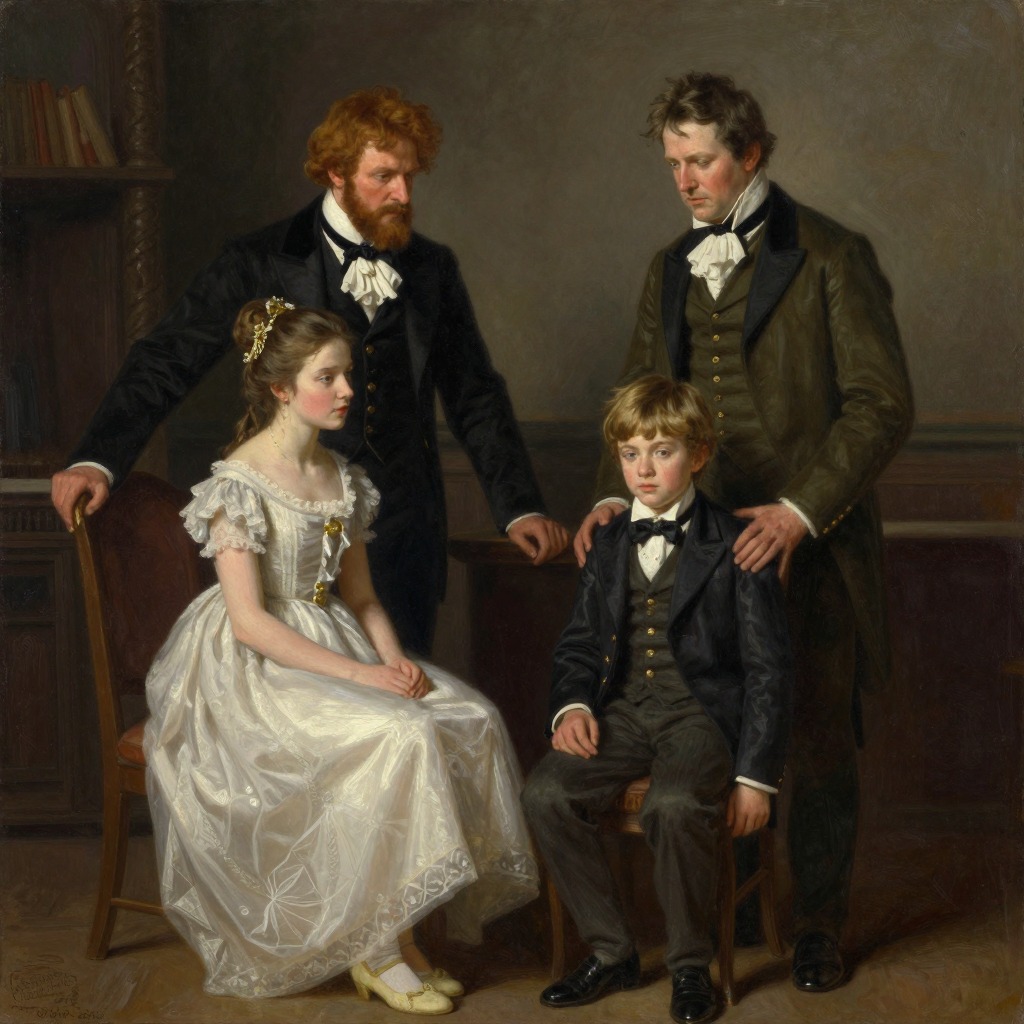
Aglaya Ivanovna Epanchin is the youngest and most beautiful of General Epanchin's three daughters, a figure of such striking loveliness that Prince Muishkin, upon first seeing her, declares her "almost as lovely as Nastasia Philipovna, but quite a different type" [E00624]. She is twenty years old at the novel's opening, described as "absolutely a beauty" who has begun to attract considerable attention in society [E00119]. Yet her beauty is matched by a formidable, capricious temperament: she is proud, quick to anger, and given to sudden, theatrical outbursts that alternately fascinate and terrify those around her. Her mother, Lizabetha Prokofievna, calls her "a tyrant! A real little demon!" and confesses that she is "exactly like me—my image in everything" [E02891]. This resemblance is crucial: Aglaya inherits not only her mother's aristocratic pride but also her impulsive, emotionally volatile nature, which drives much of the novel's romantic conflict.
Identity and Background
Aglaya is the idol of the Epanchin household. Her two elder sisters, Alexandra and Adelaida, have agreed to sacrifice their own prospects for her sake, planning a "colossal and unprecedented" dowry for her [E00342]. She is well-educated, clever, and accomplished, but she chafes against the constraints of her social position. She tells the prince that she has been "kept shut up for twenty years" and that she has long desired to run away from home [E03820]. Her reading is clandestine and rebellious: she admits to having read Paul de Kock's novels—considered scandalous—"on purpose, so as to know all about everything" [E03827]. This intellectual restlessness coexists with a fierce, almost childish naivety; she has never attended school or university, and her knowledge of the world is a patchwork of forbidden books and overheard conversations. She is, as the prince observes, a "child" in many ways, yet a child armed with a razor-sharp intelligence and an unyielding will.
Arc Through the Plot: The "Poor Knight" and the Prince
Aglaya's relationship with Prince Muishkin begins as a game of mockery and testing. She teases him mercilessly, calls him an "idiot" to his face, and orchestrates elaborate performances—such as the recitation of Pushkin's poem about the "poor knight"—that seem designed to humiliate him while simultaneously revealing her own hidden feelings [E02236]. The poem, which describes a knight who serves an ideal of pure Beauty without regard for the lady's actual conduct, becomes a coded declaration: Aglaya changes the initials on the knight's shield from A. N. B. to N. P. B., a transparent allusion to Prince Muishkin's own initials [E02256]. The prince understands the message, and the scene leaves him "uncomfortable" and deeply stirred.
Her behavior toward him oscillates wildly between contempt and tenderness. She forbids him to come to the house, then sends him a note summoning him to a rendezvous on the green bench in the park [E03190]. At this meeting, she proposes that he help her "run away from home" and embark on a life of teaching and good works abroad [E03818]. She speaks of wanting to "be brave, and be afraid of nobody," and she declares that she has chosen him as her confidant because he is "the most honest and upright of men" [E03810]. Yet moments later, she denies loving him, claims she loves Gania Ivolgin instead, and then bursts into laughter at her own lies [E03843]. This volatility is not mere coquetry; it is the expression of a soul torn between genuine affection and the terror of vulnerability.
Relationships and Conflict
Aglaya's central conflict is with Nastasia Philipovna, the woman who haunts Prince Muishkin's past. Nastasia writes Aglaya a series of letters, urging her to marry the prince and declaring that she herself loves Aglaya and wishes to see her happy [E03890]. Aglaya is both fascinated and repelled by these letters; she shows them to the prince and demands to know what they mean. The confrontation between the two women is the novel's most explosive scene. Aglaya, having arranged a meeting at Nastasia's house, launches into a bitter tirade, accusing Nastasia of being unable to love the prince because she is "too self-loving" and addicted to her own shame [E05125]. Nastasia retaliates by claiming that she can command the prince to stay with her at any moment, and the scene ends with Aglaya fleeing in hysterics [E05172].
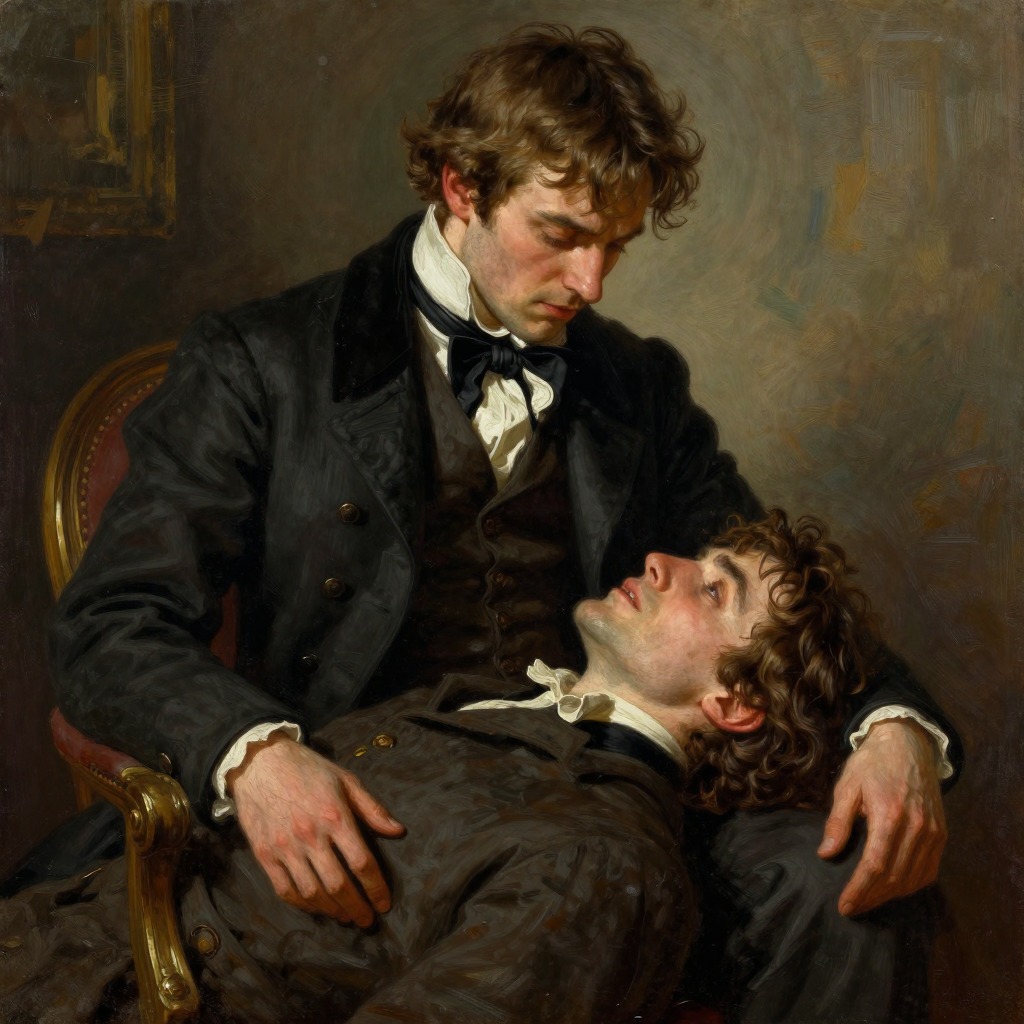
Aglaya's relationship with her family is equally fraught. She quarrels with her mother, her sisters, and even her father, accusing them of trying to "throw her at people's heads to be married" [E03818]. She refuses Evgenie Pavlovitch Radomski's proposal, and she mocks the idea that she might be in love with the prince. Yet when the prince suffers an epileptic fit at the family's evening party, it is Aglaya who rushes to catch him as he falls [E04989]. Her love for him is real, but it is a love that cannot survive the corrosive presence of Nastasia Philipovna.
Change and Ending
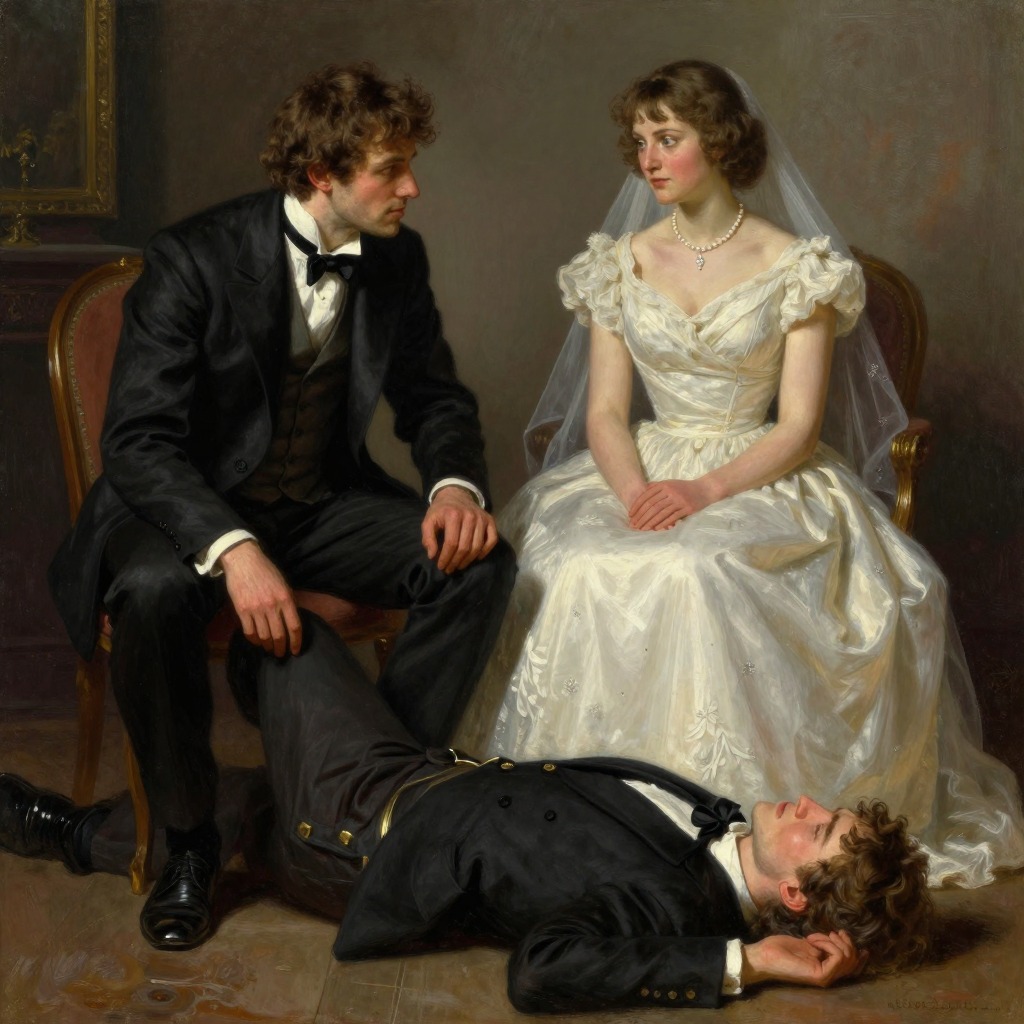
After the disastrous confrontation with Nastasia, Aglaya falls ill with a nervous fever [E05211]. The Epanchin family leaves Pavlofsk, and the prince is forbidden to see her. When he later learns of her fate, it is through Evgenie Pavlovitch's letters: Aglaya has married a Polish count, an exile who turns out to be a fraud, and has converted to Roman Catholicism under the influence of a Jesuit priest [E05539]. The marriage is a disaster; she quarrels with her family and disappears from their lives. The novel's final image of Aglaya is one of tragic waste: a brilliant, passionate young woman who, in her desperate search for freedom and meaning, has delivered herself into the hands of a charlatan.
Thematic Significance
Aglaya represents the novel's exploration of the conflict between ideal love and the corrupting forces of pride, jealousy, and social convention. She is, in many ways, the mirror image of Nastasia Philipovna: both are beautiful, proud, and damaged by the men who desire them. But where Nastasia embraces her own degradation, Aglaya fights against it with every weapon at her disposal—wit, cruelty, and a fierce, unyielding will. Her tragedy is that her fight is ultimately self-destructive. She cannot accept the prince's love because she cannot share it, and she cannot forgive him for his pity for Nastasia. In the end, she chooses a man who is the antithesis of everything the prince represents: a false count, a political adventurer, a manipulator. Her fate is the novel's most devastating proof that "beauty" cannot "save the world"—that even the most luminous spirit can be broken by the weight of circumstance and the failure of love.